When people are needed yesterday, this is the first-choice direction. Geographic proximity and a similar work culture make it possible to launch the first batch in weeks rather than months.
7 countries: Ukraine, Belarus, Moldova, Georgia, Kazakhstan, Uzbekistan, Turkey
Candidates on site within 2–3 months. The timeline depends on the processing capacity of the competent authorities, consulates, embassies and visa systems.
single residence and work permit (MUP), D visa where required
Scope
recruitment, permits, relocation
01Region
Why eastern directions are still the fastest
The East does not compete with Asia on length of stay – it competes on speed. If a hotel on the coast needs thirty people for a season or a shift in Zagreb has to be closed within weeks, no other direction will do it.
The advantage starts with the procedure. Employment is based on a single temporary residence and work permit issued by the Ministry of Interior (MUP) on the employer's application. Several eastern nationalities also travel to Croatia visa-free, which removes a whole stage from the schedule. That lets you react to orders that appeared this quarter, not in the annual plan.
The second asset is work culture. Industrial realities in Ukraine, Moldova, Georgia and Kazakhstan are close to what employers in Croatia expect – candidates know shift work, output norms and basic safety rules. Communication is direct: if something is unclear, they ask instead of staying silent. Onboarding takes days, not weeks.
The third is the technical base. Vocational schools and technical colleges across the region train welders, turners, CNC operators, electricians and mechanics. Turkey adds large-scale experience in textiles, furniture and construction.
One limitation is worth knowing: turnover is higher than on Asian directions, because home is a bus ride away rather than a flight across the world. For multi-year staffing we recommend a mix – the East for speed and seasons, Asia for the stable core of the team.
7
eastern countries in continuous recruitment coverage
Per project
realistic time to the first batch on site
MUP
single residence and work permit for every eastern direction
300+
people in a single seasonal project
02Countries
Countries we recruit from in the East
The legal route depends on nationality – some directions travel visa-free, others need a D visa arranged before departure.
Work culture in the East – what it means in practice
This is the direction with the smallest cultural gap. The challenge is not communication but retaining a worker whose way home is short and easy.
Direct communication
A worker will say outright that something is unclear, that a machine is faulty or that the roster does not suit them. Feedback reaches the team leader immediately.
For the employer: Use it: ask for improvement ideas on the line – the answers are often very specific.
Familiarity with industrial reality
Output norms, shift work and basic safety rules are known from previous plants. Technical onboarding takes days, not weeks.
For the employer: Shorten the general training and spend the time on your line's specifics and quality.
Proximity to home and seasonality
Trips to family are frequent and switching employer is easy. That is the main reason turnover runs higher here.
For the employer: Agree leave and travel rules upfront – predictability limits unplanned absence.
Language: Russian, Turkish, basic Croatian
Ukrainians and Belarusians pick up basic Croatian quickly. Candidates from the Caucasus and Central Asia communicate in Russian, Turkish workers in Turkish with basic English.
For the employer: For mixed groups appoint a team leader who speaks the team's language – that is enough.
The eastern direction is a tool for closing gaps in weeks. The core of a team is built elsewhere – but when a season on the coast has to be staffed, nothing replaces it.
Primework coordination team
04Skills
Qualifications – how we verify eastern candidates
The profile includes vocational documents, employment history at named plants and – for technical roles on client request – an optional practical test as a paid add-on.
Technical and vocational education
Regional vocational schools and technical colleges train welders, turners, CNC operators, electricians and mechanics. Diplomas are verified and translated by a sworn translator.
Professional C+E drivers
We check the category, international route experience and incident history, then handle the licence exchange and attestation needed in Croatia.
Practical test before departure
Welders produce weld samples, operators demonstrate machine work. The material reaches the candidate profile before the employer decides.
Licences completed after arrival
Where a role requires it, relevant equipment licences are arranged in the first weeks after arrival in Croatia.
Sectors we staff with eastern candidates
Manufacturing Construction Transport and logistics Welding Warehousing Agriculture and orchards Hospitality and hotels
05Process
How recruitment from the East runs
We match the legal route to nationality and to how quickly you need people on shift.
1
Consultation and route selection
Day 1–2
We agree roles, volume and date, then confirm whether a D visa is needed before travel.
2
Contract and recruitment campaign
Week 1
We launch sourcing with partners in Kyiv, Chisinau, Tbilisi, Astana, Tashkent or Istanbul.
3
Selection and interviews
Week 1–2
A shortlist with verified documents. A practical test is available only as an optional paid add-on on client request. Interviews run with interpreting where needed.
4
Single residence and work permit
Week 2–6
We file the employer's application with the Ministry of Interior (MUP).
5
D visa, if required
Week 3–6
Document assembly and an appointment at a Croatian embassy or consulate – for visa-free nationalities this stage does not apply.
6
Transport, pickup and accommodation
Week 4–8
Coach or flight, pickup, housing, starter pack, address registration and help opening a bank account.
7
Onboarding and coordinator support
First 3 months
Medicals, safety training, workstation instructions and reviews at 30 and 90 days.
06Formalities
Hiring workers from the East
Every eastern direction is handled on one legal basis, kept current with the Ministry of Interior's practice.
01
Single temporary residence and work permit
One procedure at the Ministry of Interior (MUP) covers both the right to stay and the right to work, filed by the employer.
02
D visa where required
Needed for candidates whose nationality does not travel to Croatia visa-free; arranged at a Croatian embassy or consulate before departure.
03
Renewals and continuity
We track permit deadlines and file renewals so employment continuity is never broken.
04
Employer obligations
We prepare the documentation employers must hold on foreign workers under Croatian rules on employing foreigners.
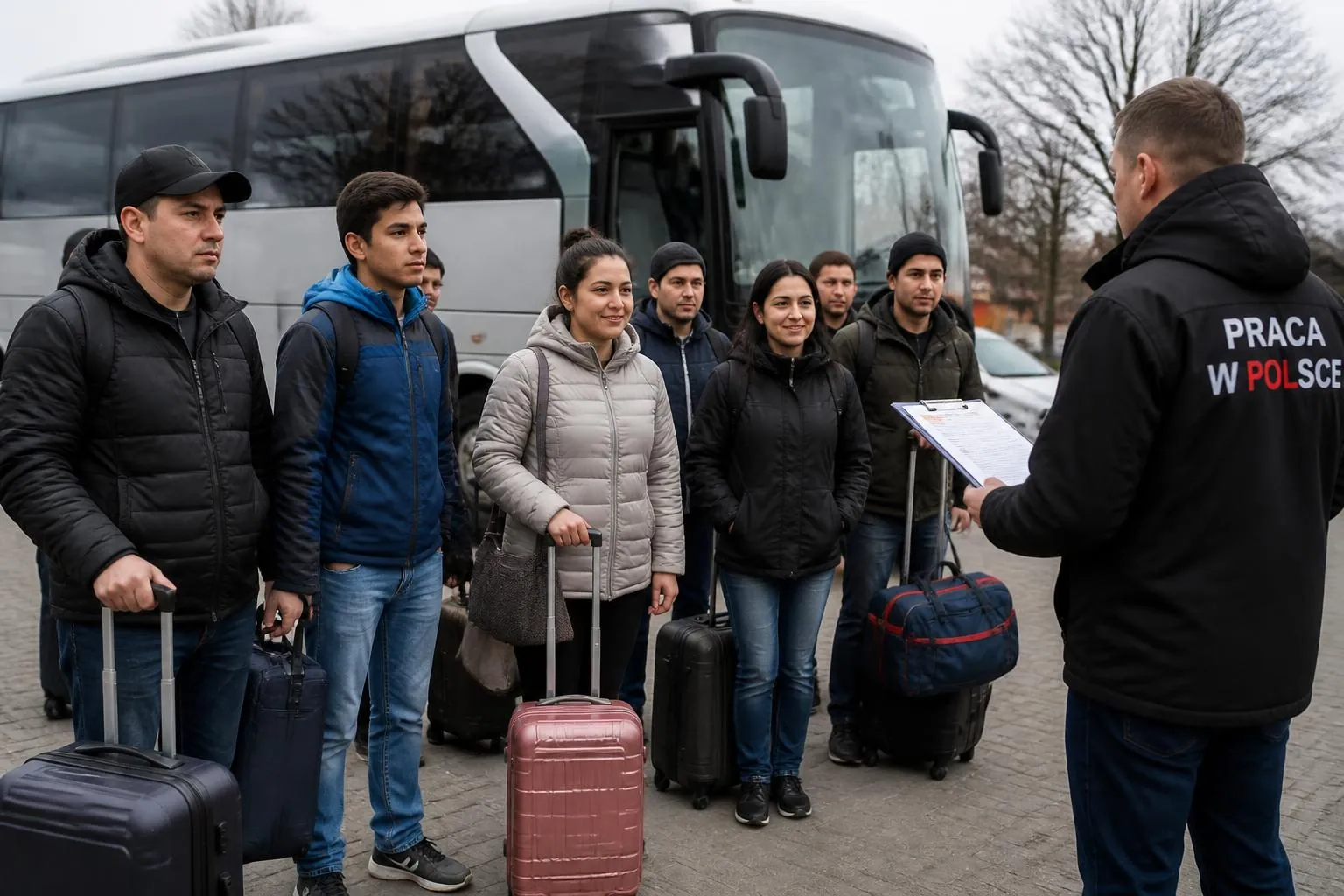
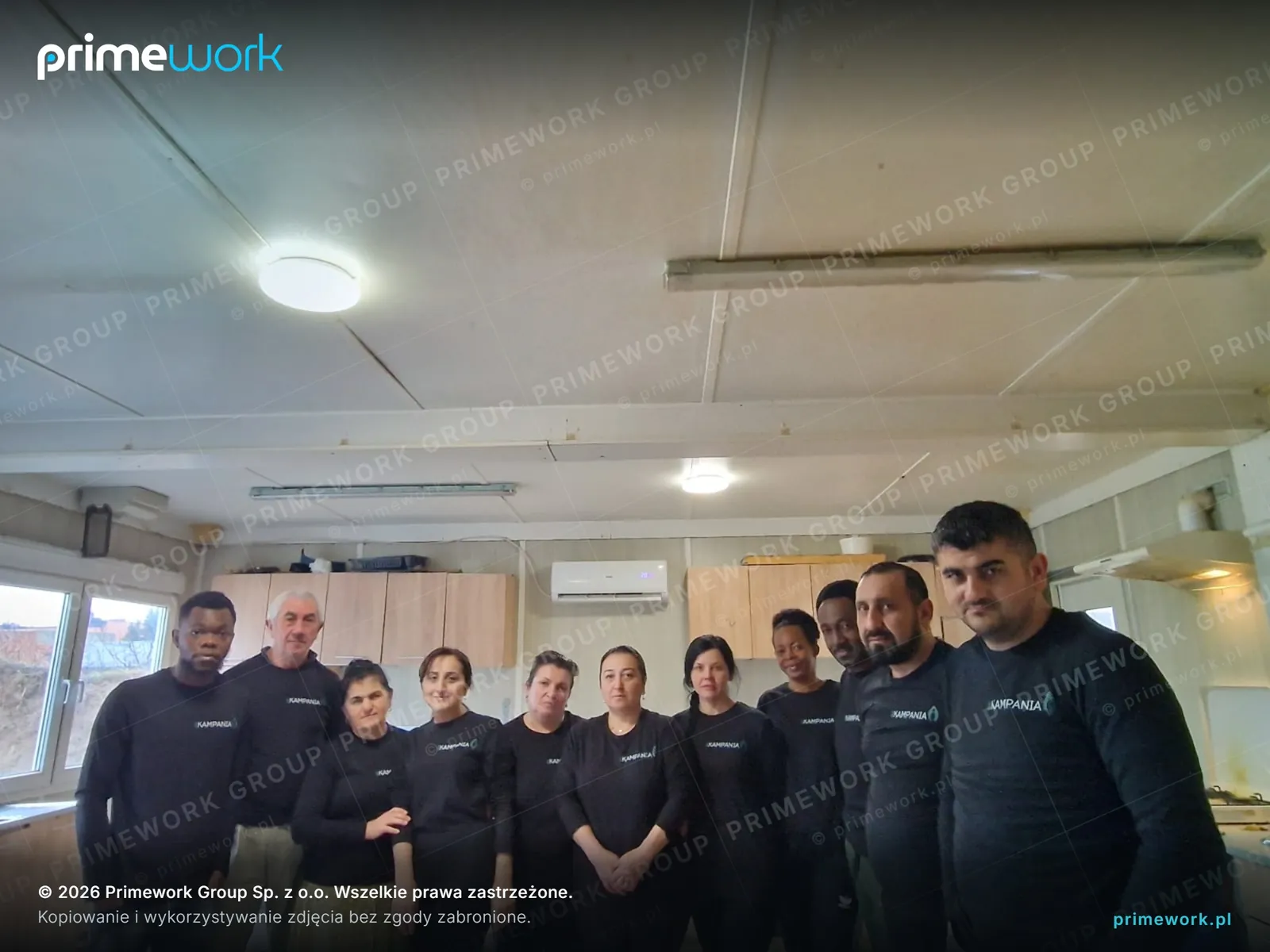
Groups arrive by coach or plane and a coordinator meets them on site. Below are frames from arrivals, interviews and first days in Croatia.
Arrival photos
The Primework recruitment team during a project meeting
Coordination and permits team
Interviews with candidates
Selection with the employer
08Practice
Best practices for the first 90 days
Here the game is not about onboarding but about retention. Below is what in practice keeps people for longer than one season.
What works
Clear leave and home-travel rules agreed before arrival
Rate and bonus system in EUR written into the contract with no room for interpretation
A development path: operator → senior operator → team leader
Using direct communication to collect shop-floor improvements
Housing close to the workplace and predictable transport to shifts
A review at 30 and 90 days with the coordinator present
What to avoid
Treating the eastern direction purely as cheap labour
Changing terms after arrival – here it leads to resignation within days
Late payment, even once
Overlooking that some candidates hold higher technical skills than the role requires
Building multi-year staffing on eastern directions alone
Having no plan for peak periods of travel home
09FAQ
Frequently asked questions about workers from the East
Ukraine, Belarus, Moldova, Georgia, Kazakhstan, Uzbekistan and Turkey. These directions are close both geographically and culturally, and offer the shortest lead time of everything we cover.
Candidates on site within 2–3 months. The timeline depends on the processing capacity of the competent authorities, consulates, embassies and visa systems. That is far faster than Asia or Africa, because the residence and work basis is a single procedure and several eastern nationalities travel visa-free.
A single temporary residence and work permit issued by the Ministry of Interior (MUP), filed by the employer. Where the nationality requires it, a D visa is arranged at a Croatian embassy or consulate before travel.
Ukrainians and Belarusians often pick up basic Croatian quickly because the languages are related. Candidates from Georgia, Kazakhstan and Uzbekistan usually communicate in Russian, and Turkish candidates in Turkish with basic English. For larger groups we assign a team leader who speaks the team's language.
Very close to what employers in Zagreb, Split and Rijeka expect: direct communication, willingness to ask questions, autonomy on simple decisions and a natural attitude to shift work. Onboarding is shorter than on other directions because industrial realities are similar.
Yes, that is its biggest advantage. Short lead times make eastern directions the best fit for seasonal peaks on the coast, in agriculture, food processing, logistics and construction.
Higher than in Asia, because proximity makes trips home and changing employer easy. For multi-year staffing we therefore recommend mixing eastern directions with Asian ones.
A strong technical base from vocational schools and technical colleges: welders, turners, CNC operators, electricians, mechanics and professional drivers. Turkey adds experience in textiles, furniture and construction.
Yes, in line with Croatian rules on foreign driving licences. For professional drivers we handle the exchange and the attestation needed to run international routes.
Yes. Pickup at the border or airport, transfer to housing, a starter pack, address registration and help opening a bank account are part of the relocation package, exactly as on other directions.
It is the most affordable direction in our portfolio: shorter transport, a single permit procedure and fewer translations. Budgets are quoted in EUR and cover the MUP permit fee, transport, accommodation, medicals and safety training plus the agency fee.
Yes. We prepare the employer's application to the Ministry of Interior, maintain a document register and track renewal deadlines so residence and work stay continuous.